


How much of a difference can targeted high-street relief make when the real pressure on small-business cash flow comes from somewhere else entirely? Rising operating costs and cautious consumer spending dominate the headlines, but for the significant share of UK SMEs that sell to other businesses rather than to the public, late payment from larger clients remains a stubborn, less visible drain on working capital.
The Office of the Small Business Commissioner’s annual report for the year to 31 March 2025 noted that some larger firms had begun extending supplier payment terms again towards the end of the reporting period, even as overall overdue-invoice rates showed slight improvement. That tension, between headline progress and ground-level deterioration, frames the real question for 2026.
You may also like: UK Lenders Tighten Mortgage Criteria Amid Rising Arrears
Late payment pressure on UK small business cash flow
Cost increases grab attention because they arrive on a known date. A higher National Living Wage or a change to employer National Insurance hits payroll on a specific month. Late payment, by contrast, is corrosive precisely because it is unpredictable.
The Small Business Commissioner’s casework team recovered more than £320,000 in late payments during 2024-25. That figure represents only the cases escalated to the Commissioner’s office. The underlying volume of overdue invoices across the economy is far larger.
Related reading: UK house prices in 2026 as buyers face mortgage costs
For a small supplier waiting 60 or 90 days beyond agreed terms, the consequences are concrete: deferred stock orders, missed early-payment discounts from their own suppliers, and short-term borrowing at rates that have risen sharply since 2022. A business turning over a few hundred thousand pounds a year can find a single delayed invoice worth tens of thousands enough to force difficult decisions about staffing or investment.
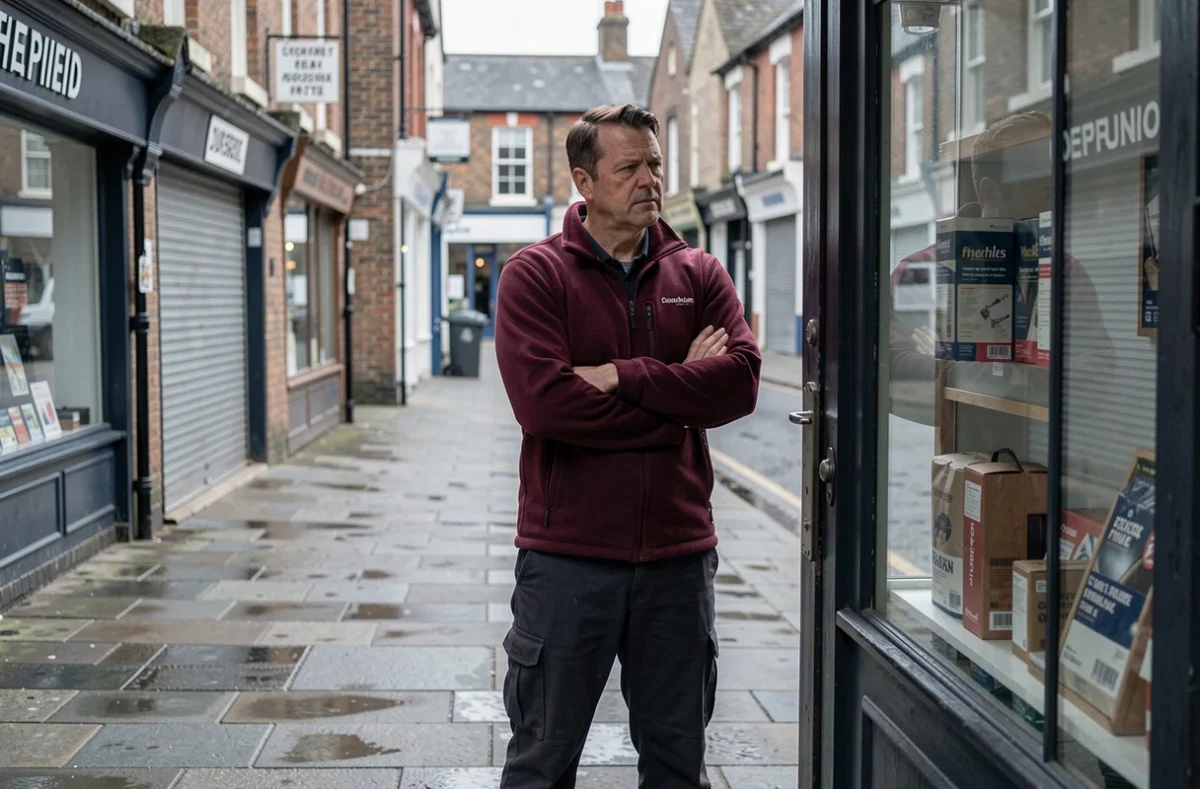
Rising costs for SMEs in 2026: where the money goes
The Federation of Small Businesses has described the cluster of cost increases landing in April 2026 as comparable to pandemic-era pressures, but without equivalent government support. The table below sets out the main categories side by side.
| Cost category | What changed | Who is most exposed |
|---|---|---|
| Payroll (wages and statutory sick pay) | Higher National Living Wage, removal of exemptions on statutory sick pay | Labour-intensive sectors: hospitality, care, retail |
| Employer National Insurance | Rate increased to 15%, lower secondary threshold | All employers, but heaviest on those with many lower-paid staff |
| Energy costs | Standing charges and unit rates remain elevated | Manufacturers, food producers, bricks-and-mortar retail |
| Business rates | Changes to reliefs, reduced historic discounts | High-street and town-centre occupiers |
| Dividend tax | Increased rates squeezing owner income | Owner-managed limited companies |
One estimate cited by the FSB suggests an employer with nine staff could face employment costs rising by roughly £25,000 or more per year from wage and sick-pay changes alone. That figure does not include energy, rates, or the indirect cost of chasing overdue invoices.
Business rates relief: high-street focus versus B2B reality
The Budget 2026 package includes business-rates measures described as offering “breathing space” for smaller firms. The detail matters: the announced reliefs are limited by both sector and location, targeting retail, hospitality, and leisure premises in town centres and high streets.
That design helps a cafe in a market town or a bookshop on a high street. It does little for a small engineering workshop on an industrial estate, a freelance consultancy operating from a serviced office, or an IT support firm working from home with a handful of business clients who pay late.
- Eligibility depends on property type and rateable value, not on the financial health of the business occupying it
- Firms outside retail, hospitality, and leisure, including many B2B service providers, fall outside the relief entirely
- The relief is time-limited, creating uncertainty about rates bills in subsequent years
The mismatch is significant. B2B small businesses facing late payment get no direct benefit from high-street rates relief. Their cost base rises just as sharply, but the policy response is not aimed at them.
What the Commissioner’s office offers and what it cannot fix
The Small Business Commissioner provides a formal route for small suppliers to seek help recovering overdue invoices. The annual report describes enquiries, complaints handling, and direct recoveries. For the businesses that use it, the service can unlock stuck payments.
The limitation is structural. The Commissioner’s office handles individual cases. It cannot change the behaviour of large buyers who treat extended payment terms as a free source of working capital. Until compliance and enforcement mechanisms carry real commercial consequences for late payers, the pattern is likely to repeat.
Cautious consumer spending and reduced demand for UK SMEs
On the demand side, consumer caution compounds the cost squeeze. Household budgets remain under pressure from higher mortgage rates, elevated food prices, and energy bills that, while below their 2022-23 peaks, have not returned to pre-crisis levels.
For consumer-facing small businesses, the effect is straightforward: fewer transactions, lower average basket sizes, and customers trading down. For B2B firms, the impact is indirect but real. When a retailer’s takings fall, it delays paying its suppliers. When a restaurant group tightens spending, its cleaning contractor or food wholesaler absorbs the gap.
Cautious consumers do not just reduce revenue, they lengthen the entire payment chain. A small firm three links down the supply chain may feel the demand drop as a cash-flow problem months before it shows up as a revenue decline in its own accounts.
Practical levers for small businesses managing cost and cash-flow pressure
No single measure offsets the combined weight of higher payroll costs, elevated energy prices, and unreliable payment from clients. A few specific actions, though, address the most controllable risks.
- Review payment terms with every major client annually, and use the Small Business Commissioner’s complaint process when terms are breached, not just when relationships break down
- Price reviews should reflect the full increase in employment costs, including the employer NI rise, not just visible input costs like materials or energy
- Short-term credit facilities secured before cash flow tightens cost less and carry fewer conditions than emergency borrowing arranged under pressure
- Track days-sales-outstanding as a leading indicator: if the average creeps up by even a few days across your client base, the cumulative effect on working capital is immediate
The gap between policy announcements and operational reality is where small businesses lose ground. Rates relief helps the firms it reaches, but the majority of UK SMEs sit outside its scope. For those businesses, the combination of rising costs, slow-paying clients, and cautious end consumers creates a compounding pressure that targeted relief alone cannot resolve.
Cash-flow management, assertive credit control, and realistic pricing remain the primary defences. They are not new, and they are not glamorous. They are, for most small firms in 2026, the difference between absorbing the pressure and being consumed by it.





