Pet insurance is a contract that reimburses a portion of eligible veterinary costs after the owner pays treatment upfront and submits a claim. In 2024, Association of British Insurers members paid out £1.23 billion across 1.8 million pet claims, a record figure that reflects both rising vet fees and the growing number of insured animals in the UK. Understanding exactly when a policy activates, and when it does not, is the difference between financial relief and an unexpected shortfall.
How a claim spanning two policy years changes what you pay
Most pet insurance policies run on 12-month terms. When a condition is first diagnosed and treated within one policy year, the claim process is straightforward: the owner pays the excess once, the insurer covers eligible costs up to the annual or per-condition limit.
Recommended read: How to Make a Successful Insurance Claim
Complications arise when treatment crosses a policy-renewal date. A dog diagnosed with a cruciate ligament tear in month eleven may need physiotherapy, follow-up scans, or even a second surgery in the next policy year. At renewal, the insurer can reset certain financial thresholds.
This means the owner may face a fresh excess, a revised co-payment percentage, or both, even though the condition is the same one. Some lifetime policies absorb ongoing conditions without a new excess provided the policy renews without a break, but this is not universal. Time-limited and per-condition policies may exclude the condition entirely once the initial benefit period expires.
You may also like: Pet insurance: comparing lifetime and time-limited cover
Checking your position before renewal
Owners whose pet is mid-treatment as renewal approaches should request a written summary from the insurer at least six weeks before the renewal date. The key questions are specific:
- Will a new excess or co-payment apply to the same condition in the next policy year, and if so, at what rate?
- Has the per-condition or annual limit reset, or does it carry over as a reduced balance?
- If the policy type changes at renewal (for example, from a fixed benefit to a percentage co-pay), how does that affect the ongoing claim?
Getting these answers in writing, before renewal, removes the guesswork. If the insurer confirms a new excess will apply, the owner can budget for it or compare other providers while the renewal window is still open.
Veterinary bills pet insurance typically covers
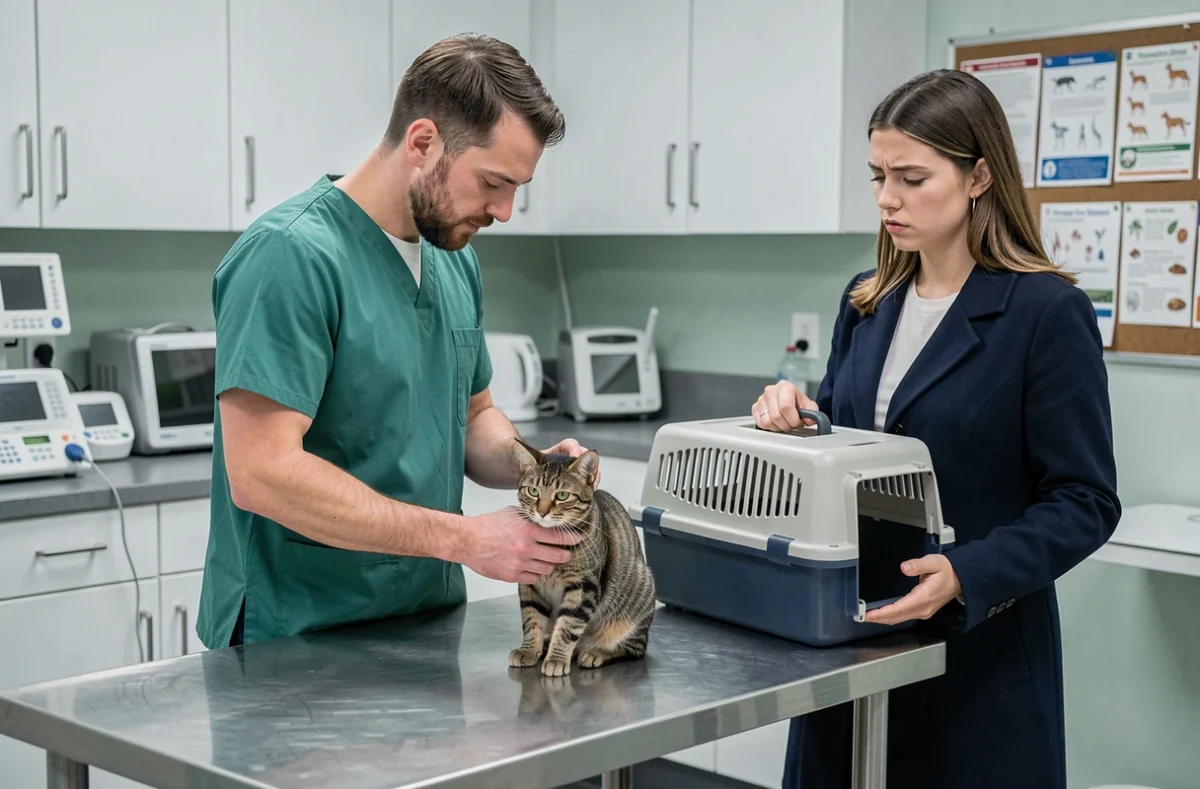
The core purpose of pet insurance is covering unforeseeable illness and injury. A policy that includes accident and illness cover will generally pay for diagnostics (blood tests, X-rays, MRI scans), surgery, hospitalisation, prescribed medication, and sometimes post-operative rehabilitation.
Lifetime policies maintain cover for chronic conditions such as diabetes or arthritis year after year, provided the policy is renewed continuously. This matters because chronic conditions generate recurring costs that can run into thousands of pounds over a pet’s life.
Accident-only policies are cheaper but narrower. They respond to sudden physical injuries (fractures, lacerations, poisoning) and exclude illness altogether. For owners on a tight budget, accident-only cover still removes the financial shock of an emergency, but it leaves the most statistically common claims, those related to illness, entirely uninsured.
Exclusions that catch owners off guard
Knowing what a policy excludes is at least as valuable as knowing what it covers. Pre-existing conditions are excluded by every insurer in the UK market. Any illness or injury that showed symptoms, was diagnosed, or was treated before the policy start date will not generate a valid claim.
Waiting periods apply to new policies, typically a few days for accidents and a longer window for illness. Treatment during a waiting period is not covered even if the condition itself would normally be eligible.
Three further exclusions regularly cause disputes:
- Routine and preventive care (vaccinations, flea and worm treatments, dental scale-and-polish, neutering) falls outside standard policies unless the owner has purchased a wellness add-on.
- Behavioural treatments are excluded on many mid-range policies. Where cover exists, annual caps tend to be low.
- Dental illness (as opposed to dental injury) is excluded or sub-limited on a large proportion of policies. Owners who assume tooth extractions are covered often discover the exclusion only at claim stage.
Reading the policy schedule and the exclusions section before signing, rather than relying on marketing summaries, is the single most effective way to avoid a rejected claim.
Policy types and how they affect long-term vet costs
Four broad structures exist in the UK pet insurance market, and each has a direct impact on how much financial protection an owner actually receives over the animal’s lifetime.
| Policy type | How it works | Main limitation |
|---|---|---|
| Lifetime | Annual limit per condition resets each year at renewal | Premiums rise with the pet’s age; must renew without a break |
| Per-condition (maximum benefit) | Fixed monetary cap per condition with no time limit | Once the cap is reached, that condition is permanently excluded |
| Time-limited | Covers each condition for a set period (commonly 12 months) | Condition excluded after the time window closes, regardless of remaining budget |
| Accident-only | Covers injuries from accidents | No illness cover at all |
Lifetime cover provides the broadest long-term protection, but it is also the most expensive and its premiums can increase sharply as a pet ages. Owners who switch from a lifetime policy to a cheaper alternative mid-way through a pet’s life risk losing cover for any condition already claimed, because the new insurer will classify it as pre-existing.
When insurance alone is not enough
Even a comprehensive policy has limits. Co-payments, excesses, sub-limits on specific treatments, and annual caps mean the owner nearly always bears some portion of the bill. For owners facing financial hardship, several UK charities operate veterinary assistance programmes.
The RSPCA, PDSA, and Blue Cross each provide subsidised or free veterinary care to eligible pet owners, usually those receiving means-tested benefits. Eligibility criteria and postcode restrictions vary, so checking directly with each organisation is the practical first step.
Some veterinary practices also offer interest-free payment plans for larger treatments, spreading the cost over several months. These arrangements sit outside the insurance relationship entirely and can supplement, rather than replace, a claim payout that falls short of the total bill.
Combining insurance with an emergency savings buffer of a few hundred pounds covers the gap between what a policy pays and what a vet charges. For chronic conditions on a lifetime policy, this buffer absorbs the annual excess and any percentage co-payment without forcing a difficult financial decision at the point of treatment.
The UK veterinary sector is also under regulatory scrutiny. Recent moves aim to improve transparency around fees and prescription costs, which may help owners compare costs more easily, but transparency does not reduce a bill or make it eligible under an insurance policy. The financial responsibility still sits with the owner, and insurance remains the primary tool for transferring the unpredictable portion of that cost.