


UK house prices in 2026 are caught between two opposing forces: modest demand from buyers still willing to transact, and mortgage rates that have climbed enough to drag down approvals and cool price growth. The Bank of England’s Monetary Policy Report confirmed that the UK House Price Index fell over the three months to August, while mortgage approvals for house purchase fell over the three months to September.
These pressures land unevenly depending on borrower type, lender policy, and local market.
Related reading: UK inflation in 2026 and the pressure on household budgets
FCA mortgage flexibility rules: real relief or paper concession?
The FCA’s PS25/11 changes, published on 22 July 2025, introduced what looked like a meaningful easing of affordability checks. Lenders gained permission to use a modified affordability assessment for certain remortgages that do not increase borrowing. They also no longer need to run a full affordability assessment when a borrower shortens their mortgage term.
The critical word is “allow”. PS25/11 permits flexibility but does not compel lenders to offer it. A lender can acknowledge the rule change and still apply its previous, stricter criteria. For borrowers hoping to remortgage onto a better rate without an intrusive affordability review, the practical outcome depends entirely on whether their lender has adopted the new framework.
Further reading: UK small businesses face rising costs and cautious consumers
This gap between regulatory intent and lender adoption matters most for two groups:
- Homeowners on older, lower fixed rates who face a payment shock at renewal but cannot pass a fresh affordability test at today’s higher rates, sometimes called “mortgage prisoners” of the rate cycle.
- Borrowers who want to shorten their term to reduce total interest costs, a move the FCA explicitly tried to make easier, but which some lenders still subject to full underwriting.
The FCA’s Regulatory Initiatives Grid for November 2026 also records a review of later-life lending, including retirement interest-only mortgages. That review addresses a different affordability challenge from the one facing most first-time buyers, but it signals that the regulator recognises mortgage rules are not serving all borrower segments equally.
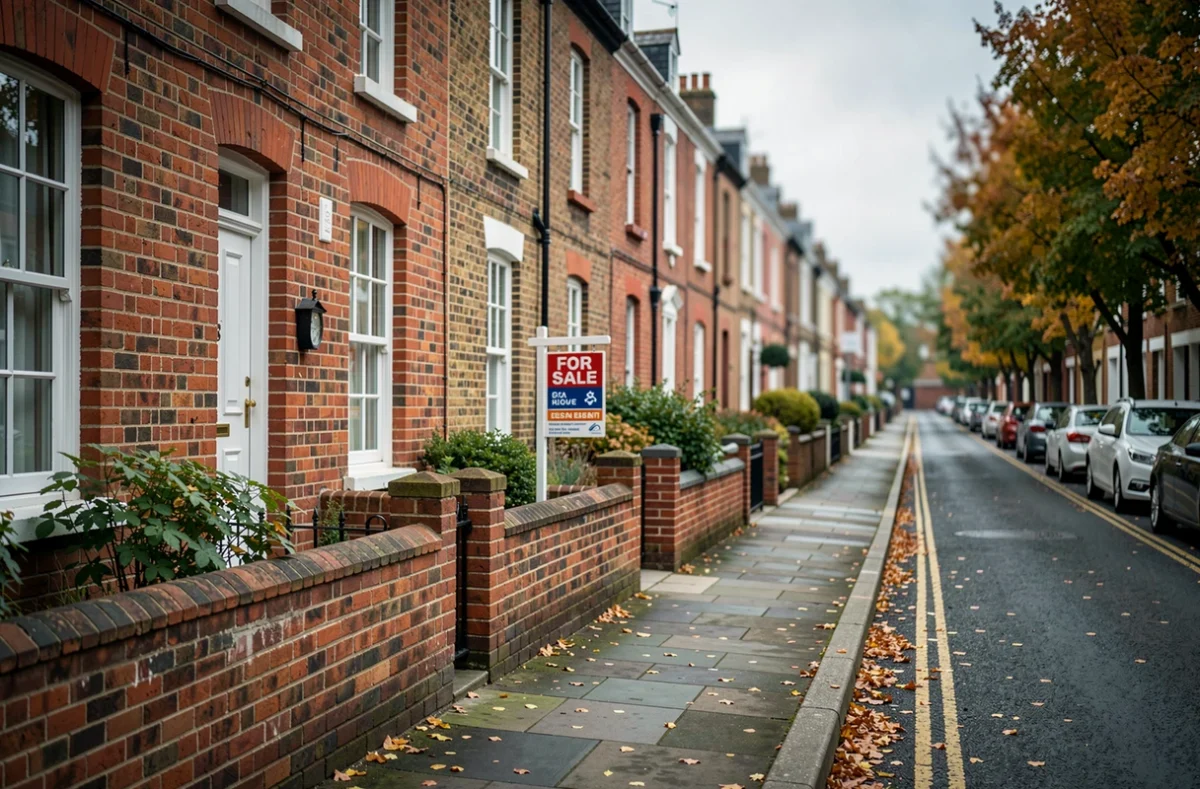
UK house price forecasts for 2026: a comparison
National forecasts for 2026 have been revised downward as the year progressed. The table below collects the most recent publicly stated positions from major property platforms.
| Forecaster | Price growth forecast (2026) | Direction of revision |
|---|---|---|
| Rightmove | 0% to -2% | Downgraded |
| Zoopla | +0.5% | Down from +1.5% |
| Most other forecasters (range) | 0% to +2% | Broadly flat or trimmed |
The spread between Rightmove’s most pessimistic scenario and Zoopla’s revised figure is roughly two and a half percentage points. That gap reflects genuine uncertainty about how far mortgage costs will suppress buyer demand before the year ends.
What the downgrades share
Every major revision cites the same mechanism: higher mortgage rates feeding through into lower affordability and weaker demand. Rightmove’s data pointed to growing affordability challenges across the property market, with asking prices adjusted accordingly. Zoopla’s halving of its own forecast underlines how quickly sentiment shifted in the second half of 2026.
Mortgage approvals versus remortgaging: a split market
The Building Societies Association’s Market Update for November 2026, published on 17 November, described a housing market that is not uniformly weak. House-purchase approvals fell, consistent with the Bank of England’s figures. Remortgaging activity, by contrast, remained robust.
This split tells a specific story. Existing homeowners are actively managing their debt, locking in or switching rates where they can. New buyers, who must pass affordability tests at current rates, face a higher bar. The market is weaker for purchases but active for refinancing.
Secured-loan defaults edged down in the third quarter, an encouraging signal that most mortgage holders are keeping up with payments. Defaults on unsecured borrowing, however, rose during the same period. The BSA flagged this as an early warning sign rather than evidence of a mortgage arrears crisis, but it suggests household budgets are under strain in ways that may eventually feed into housing decisions.
What unsecured default data signals for house prices
Rising unsecured defaults often precede a slowdown in housing transactions rather than a crash in prices. When households stretch credit cards and personal loans to cover living costs, discretionary spending, including the decision to move house, gets deferred. The result is lower transaction volumes, which keeps supply tight and prevents the kind of forced selling that would push prices sharply downward.

Regional house price gaps: why a UK-wide forecast misleads
ONS local-area data for areas such as Sefton and County Durham illustrate a point that national averages flatten out. Price movements in these areas do not track the headline UK figure closely. A region with lower average prices and a higher proportion of cash or low-loan-to-value buyers will respond differently to rate rises than a commuter belt where stretched affordability is already the norm.
Local price trends can diverge by several percentage points from the national forecast. For a buyer deciding whether to proceed in a specific postcode, the Rightmove or Zoopla headline number is a starting point, not an answer.
Regional differences also interact with the FCA flexibility rules discussed above. A lender with heavy exposure in one region may adopt the PS25/11 flexibilities to protect its remortgage book there, while a nationally focused lender may hold back. The result is a patchwork of lending criteria that varies by geography as well as by institution.
Where UK house prices and mortgage costs stand heading into 2027
The data points cluster around a few conclusions. Prices nationally are either flat or marginally negative in real terms. Mortgage approvals have dropped. Remortgaging remains active but cannot substitute for genuine new-buyer demand. The FCA’s rule changes have created theoretical breathing room that most borrowers have not yet felt.
Affordability, not supply, is the binding constraint on UK house prices in late 2026. Middle East conflict and broader geopolitical risk continue to influence inflation expectations, which in turn feed into gilt yields and mortgage pricing. Until rates stabilise or fall meaningfully, the most likely trajectory for prices is continued modest softening punctuated by local exceptions where supply is genuinely scarce.





