


Voluntary excess is not a discount lever. It is a risk-retention decision, and the premium reduction it delivers rarely compensates for the additional out-of-pocket exposure over a multi-year period. Most guides treat a higher excess as a straightforward way to cut costs. That framing ignores three variables: the actual pound saving on the annual premium, the statistical likelihood of a claim within the policy year, and your ability to fund the excess at short notice.
Total cost modelling: excess savings over a multi-year policy cycle
Raising voluntary excess from, say, £100 to £500 may shave a modest amount off the annual premium. The saving from a higher voluntary excess is not guaranteed or uniform across the market. MoneySuperMarket has noted that reductions depend on its own price-optimiser enquiries during a specific period, so the figure a driver sees will vary by insurer, risk profile, and cover level.
See also: UK car insurance premiums in 2026: what drivers should know
To evaluate whether a higher excess pays off, we need to compare cumulative premium savings against the increased claim cost over several years. If a driver saves £40 per year by moving to a £500 voluntary excess, the cumulative benefit after three claim-free years is £120. One at-fault claim in that window wipes out the saving entirely and adds £280 of net cost.
A higher excess can make a small claim uneconomic. When the repair bill sits close to or below the total excess (compulsory plus voluntary), the insurer pays little or nothing. The driver absorbs the full cost yet the claim still appears on the record, potentially inflating renewal quotes for up to five years.
Recommended read: How to Make a Successful Insurance Claim
When a raised excess genuinely helps
Drivers with long claim-free histories, off-street parking, and low annual mileage face a materially lower probability of needing to claim. For that profile, retaining more risk through a higher voluntary excess is rational because the expected claim frequency is low enough to make the annual saving worthwhile over time.
For drivers in higher-risk categories (urban parking, high mileage, younger age bands), the arithmetic tilts the other way. The premium saving is smaller in absolute terms, the claim probability is higher, and the excess amount represents a larger share of disposable income.
Non-fault claims and excess recovery: what actually happens
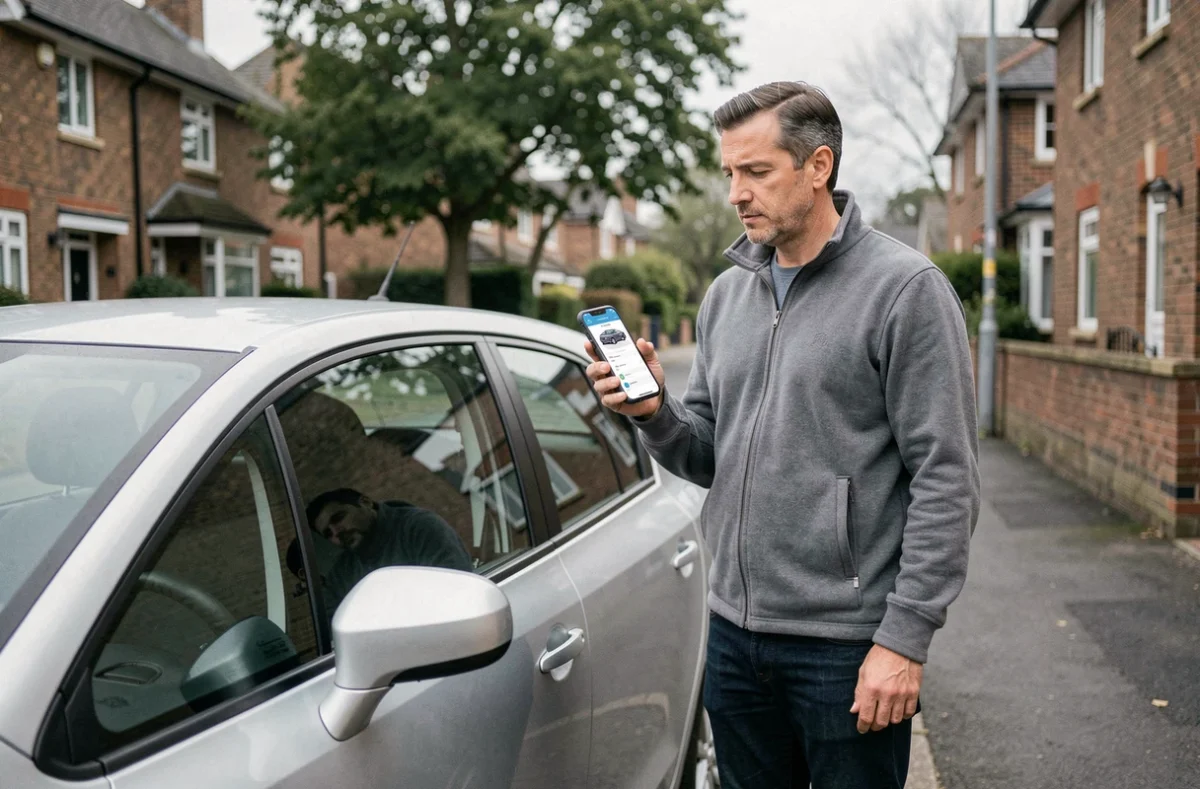
A widespread assumption holds that you never pay excess on a non-fault claim. In practice, your insurer may still require the excess upfront even when another driver caused the accident. The Financial Ombudsman has described this as a common approach: the insurer settles your claim, deducts the excess, and then attempts to recover costs from the at-fault party’s insurer.
Recovery is not instantaneous. If the other driver’s insurer disputes liability, or if the third party is uninsured, the process can take months. During that period, the policyholder is out of pocket by the full excess amount.
Untraced drivers and fault classification
An Ombudsman case involving an unidentified driver illustrates a harsher scenario. Because the insurer could not recover its costs from another party, the claim was treated as a fault claim. The customer’s excess was not refunded by the insurer. This outcome directly contradicts the expectation that “not my fault” means “no excess to pay.”
For anyone carrying a high voluntary excess, this risk is amplified. A hit-and-run incident, an untraced driver in a car park, or a dispute over dashcam evidence can all leave you bearing the full excess with no prospect of recovery.
Compulsory versus voluntary excess: how insurers set the split
Compulsory excess is the insurer’s minimum non-negotiable amount. It varies by driver profile, vehicle group, and sometimes postcode. Younger drivers and those with recent claims typically face higher compulsory excess levels, which already push total exposure upward before any voluntary element is added.
- Compulsory excess is determined entirely by the insurer based on underwriting criteria. The policyholder cannot reduce it.
- Voluntary excess is the additional amount the policyholder agrees to pay on top of the compulsory figure. It can usually be set at several fixed levels during the quote process.
- The total excess payable on any claim is the sum of both. A £250 compulsory excess plus a £300 voluntary excess means £550 out of pocket before the insurer contributes.
Drivers sometimes overlook the compulsory figure when selecting voluntary excess. The result is a total that exceeds what they can comfortably pay from savings. Always check the combined excess figure, not just the voluntary element, before accepting a quote.
Deciding the right voluntary excess level for your policy
The question is not “how much can I save?” but “how much can I afford to lose?” Treating the voluntary excess purely as a premium-reduction tool ignores the purpose of insurance, which is to transfer financial risk you cannot absorb.
- Calculate the total excess (compulsory plus voluntary) and confirm you could pay it within days of an incident, without borrowing.
- Estimate how many years of premium savings you would need to offset one claim at the higher excess level. If that number exceeds three, the trade-off is weak.
- Consider whether the vehicle’s value justifies a high excess. On an older car worth a few thousand pounds, a large excess can consume a significant fraction of any payout.
- Compare quotes at multiple excess levels with the same insurer and cover type. The saving curve is not linear, and the reduction often flattens beyond a certain threshold.
Excess protection insurance
Some insurers and brokers offer excess protection as an add-on. This policy reimburses the excess you pay after a claim. It introduces a second premium cost, so the net benefit depends on its price relative to the excess it covers. Excess protection only makes sense if its annual cost is well below the excess amount and you expect a realistic chance of claiming.

FCA scrutiny on claims handling and excess communication
The Financial Conduct Authority has called on insurance firms to improve claims handling, with particular attention to how customers are communicated with during the process. This is directly relevant to excess recovery timelines. A policyholder waiting for a non-fault excess refund may face delays that are compounded by poor communication from the insurer.
Recent regulatory attention means insurers are under pressure to be clearer about when and how excess amounts are applied, deducted, and potentially returned. Drivers should expect written confirmation of the excess position at the point of claim, not just at the point of sale.
The practical takeaway: read the excess terms in the policy schedule before renewal, not after an accident. A well-chosen excess balances affordable premiums with a claim cost you can genuinely cover. If paying the combined excess would cause financial strain, the premium saving is not worth the exposure.





