


Landlord insurance in England sits at a crossroads shaped by recent legislation. The Renters’ Rights Act has altered tenancy structures, and leaseholders are set to receive greater transparency over building insurance costs passed through service charges. For anyone letting residential property, the gap between what a policy appears to cover and what it actually pays out has widened, particularly for flats in multi-unit buildings where cladding remediation or flood risk complicates the picture.
Cladding, service charges and hidden insurance costs in leasehold flats
Most landlord insurance guides focus on standalone houses. Flats in leasehold blocks present a different problem: buildings insurance is typically arranged by the freeholder or management company, and the cost is recovered through the service charge. Landlords buying a tenanted flat in a block may never see the master policy wording.
Further reading: Pet insurance: comparing lifetime and time-limited cover
That matters more now than it did five years ago. The Government’s Remediation Acceleration Plan acknowledged that leaseholders face high fire-related insurance bills while cladding work is pending. The plan sets a 2029 objective for addressing unsafe cladding in specified taller buildings, but it does not itself guarantee lower premiums for landlords caught in the interim.
Before exchanging contracts on a leasehold rental property, three documents deserve scrutiny:
See also: Home insurance and flood risk: cover for UK households
- The block’s master buildings insurance schedule, including the insurer’s exclusions for fire, cladding defects and ongoing remediation works. A building mid-remediation may carry a loaded premium or a specific exclusion that leaves the landlord exposed.
- The latest service charge accounts, showing the insurance line item. A sharp year-on-year increase often signals a risk the insurer has repriced, and that repricing flows directly into your running costs.
- Any Section 20 consultation notices for major works. If facade or fire-safety works are planned, the freeholder must consult leaseholders on costs above a statutory threshold, but the insurance implications of those works may not be spelled out.
Landlords who skip this step sometimes discover, after a claim, that damage linked to defective cladding or external wall systems falls outside cover. The policy they pay for through the service charge protects the building’s structure in theory, while excluding the precise risk that made the premium expensive in the first place.

Flood Re exclusions and rental property eligibility
Flood Re is the reinsurance scheme designed to keep flood cover affordable for residential properties in high-risk areas. It is often presented as a safety net, but Flood Re does not cover homes built after 1 January 2009. It also excludes multi-unit dwellings and commercial properties. The scheme is due to end in 2039.
For a landlord purchasing a newer-build flat or a property converted into multiple units, this exclusion can be significant. Without Flood Re support, the insurer prices flood risk at the open market rate, which in some postcodes makes buildings cover prohibitively expensive or subject to a very high excess.
Checking eligibility before purchase is straightforward in principle. The property’s council tax band and construction date determine whether Flood Re applies. In practice, though, estate agents rarely volunteer this information, and the standard landlord insurance quote process does not always flag when Flood Re support has been declined. Landlords should ask the insurer directly whether a quote includes Flood Re backing, and if it does not, what the excess and sub-limit for flood damage actually are.
Renters’ Rights Act and landlord insurance policy wording
The Renters’ Rights Act changed the tenancy framework in England, removing Section 21 no-fault evictions and restructuring grounds for possession. Insurance policies written before these changes may contain eligibility conditions tied to tenancy type or eviction procedures that no longer reflect the legal position.
Landlords should check policy wording at renewal rather than assume older conditions still apply. Some policies, for example, required the landlord to have served a valid Section 21 notice as a precondition for certain claims, such as malicious damage by tenants following a failed eviction. That route no longer exists under the new framework.
Rent guarantee cover and legal expenses cover are the sections most likely to be affected. If a policy’s rent guarantee wording references a tenancy type or notice procedure that the Act has abolished, the insurer may argue the condition was not met. Reviewing these clauses before renewal, not after a tenant stops paying, is the only reliable way to avoid a declined claim.
Buildings, contents and liability cover for rental properties
The core of any landlord insurance policy in England rests on three elements. Buildings cover protects the structure, roof, walls and permanent fixtures against insured perils such as fire, storm, subsidence and escape of water. Escape of water is consistently the most common landlord claim type, and policies vary widely on trace-and-access cover, which pays for locating the source of a leak.
Contents cover applies to items the landlord provides: furniture in a furnished let, white goods, carpets. For an unfurnished let, contents cover may seem unnecessary, but fitted kitchens, bathroom suites and flooring still belong to the landlord and can be costly to replace after tenant damage.
Property owners’ liability is the element that protects against claims from tenants or visitors injured at the property due to a defect the landlord is responsible for. Most buy-to-let mortgage lenders require this as a minimum, and the standard liability limit is typically one million pounds or above.
Beyond these three, optional add-ons include loss of rent cover (which pays rental income if the property becomes uninhabitable after an insured event), legal expenses cover (for disputes with tenants, including possession proceedings), and home emergency cover for boiler breakdowns or burst pipes.
What standard cover rarely includes
Wear and tear, gradual deterioration, pest infestations and cosmetic damage from normal tenancy use are almost universally excluded. So is any damage arising from a property being left unoccupied beyond the policy’s void period, which is often 30 or 45 days. Landlords between tenancies need to notify their insurer or risk an invalid claim.
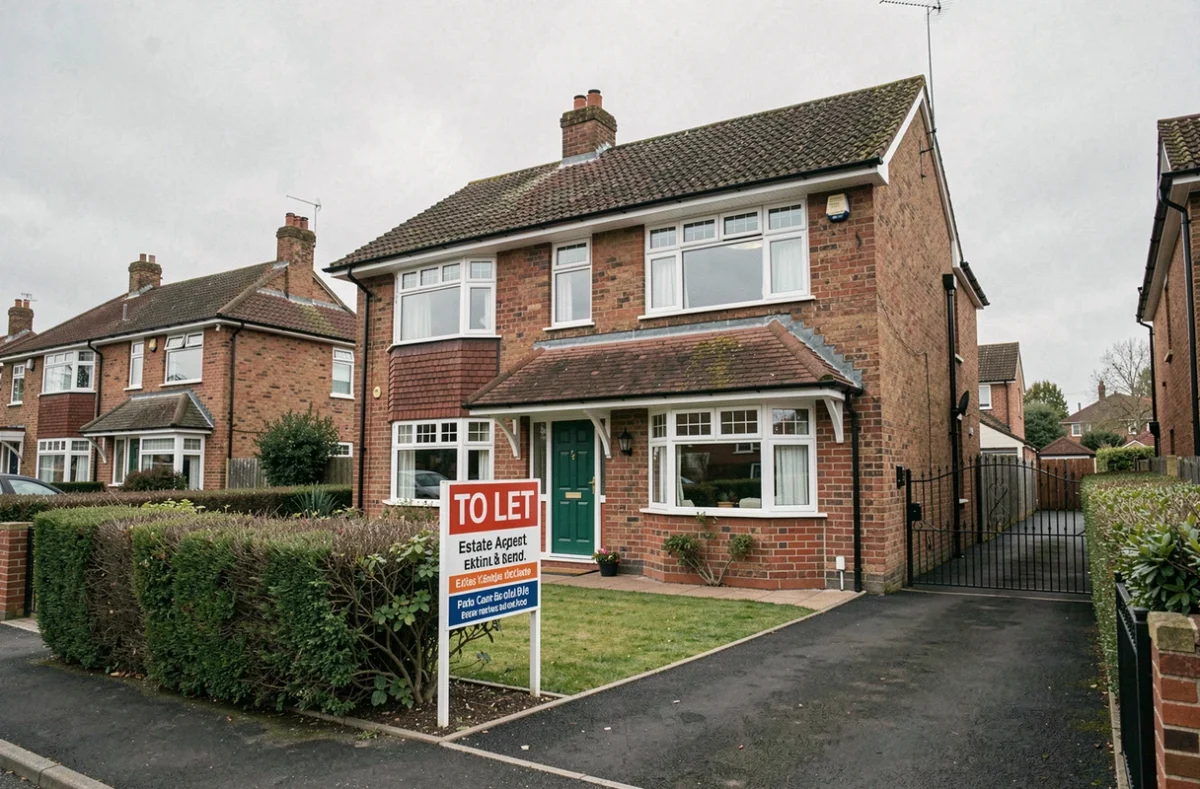
Choosing landlord insurance that matches the property’s actual risks
A single-let terraced house with a residential mortgage and a standard AST is the simplest scenario. The complications arise with houses in multiple occupation, leasehold flats in blocks with communal areas, properties near watercourses, or buildings undergoing external works.
For each of these, the question is not whether landlord insurance exists, but whether the specific policy wording addresses the specific risk. A policy that covers “buildings” does not necessarily cover the building you own if its construction type, occupancy arrangement or external condition triggers an exclusion.
Comparing quotes on price alone misses the point. The cheapest premium often correlates with the narrowest cover, the highest excess, or eligibility conditions that only become visible when you read the policy schedule. Landlords buying in leasehold blocks should cross-reference their own policy with the block’s master policy to identify gaps, particularly around liability for communal areas and shared drainage.
The rental market in England is shifting, and insurance products are adjusting to new legislation at different speeds. Reading the policy document, not just the marketing summary, remains the only reliable way to know what protection a landlord actually holds.





