


The vast majority of new-build homes arrive with defects. The visible ones (paint marks, scuffed skirting boards, misaligned kitchen doors) attract the most attention, but the paperwork sitting in a cardboard folder on the worktop can matter just as much as the walls around it.
Snagging a new-build property before completion means checking both visible workmanship and the documentation that determines what recourse you actually have once the developer walks away.
Read also: Buy-to-let tax: costs facing UK landlords in 2026
Warranty structure and reporting deadlines for new-build defects
A “10-year warranty” splits into distinct phases with different levels of protection. The first two years typically form the builder-warranty period, during which the developer bears responsibility for fixing reported defects. After that, only insurance cover for specified structural problems remains in force.
This phasing shapes what you should do at completion. Report defects in writing while the builder-warranty period is running, because the narrower insurance provisions that follow rarely cover the same scope. Locate the actual policy booklet, confirm its start date, and retain dated copies of every letter and email you send.
Related reading: Mortgage rates in 2026: what UK homebuyers are paying
Cosmetic damage operates on an even shorter clock. The NHBC Buildmark Choice policy states that cosmetic damage reported more than seven days after completion is not covered. Scratched glazing, chipped tiles, dented door frames: notice them a month after moving in and the warranty may offer no remedy. A thorough pre-completion or day-one inspection is the only reliable way to catch these items within the window.
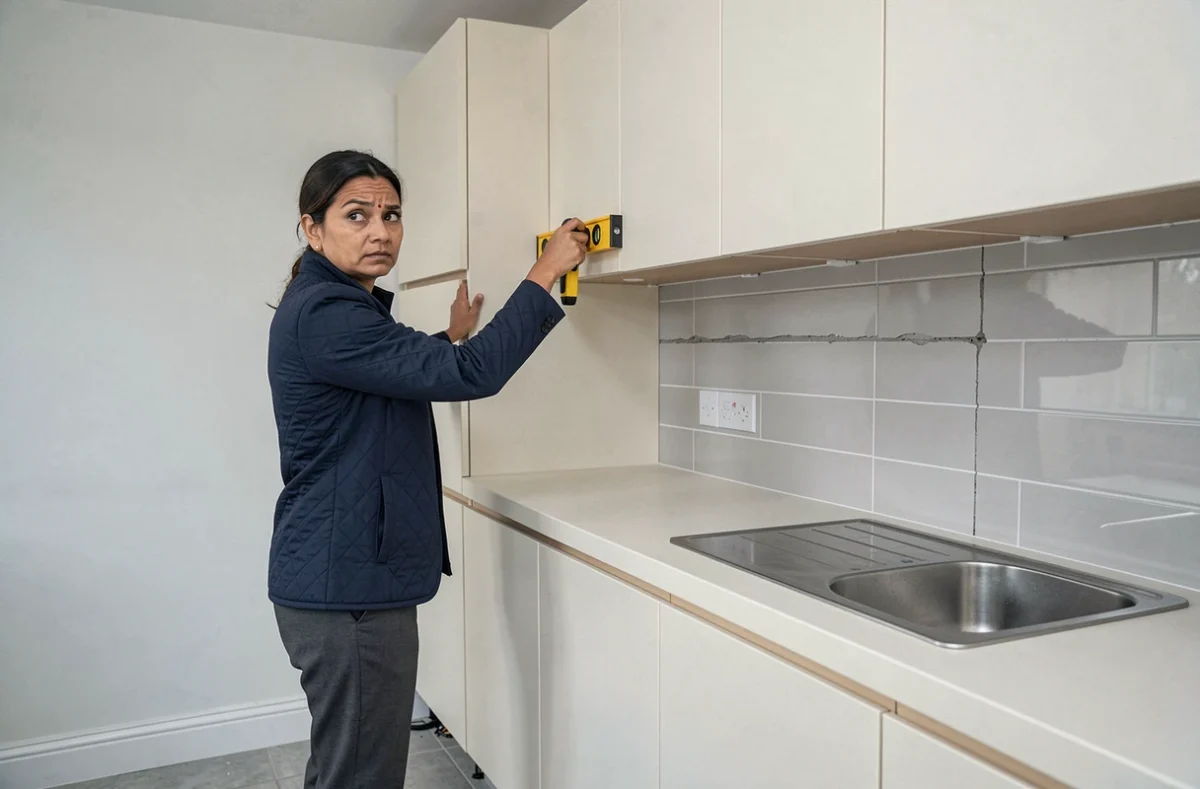
Pre-completion inspection access: what your developer actually owes you
Your right to inspect before legal completion depends on the developer’s registration and applicable code. Homes covered by the New Homes Quality Board (NHQB) Code fall under guidance describing pre-completion access for buyers. Developers outside that scheme may face no equivalent obligation.
Request access in writing as soon as the developer issues a notice to complete. If they decline, record that refusal in writing too, because it strengthens any later complaint. A pre-completion walk-through, however thorough, cannot replicate what a second check reveals once water, heating, and appliances are running. Boiler pressure drops, slow drainage, faulty extractor fans: these only show up with live services.
What to request before you arrive on site
- A copy of the warranty policy booklet, including the exact start date, so you know which defects are covered and for how long.
- The electrical installation certificate (EICR) and gas safety certificate, confirming that fixed installations have been tested and comply with current regulations.
- Details of the complaints and redress route that applies to your purchase, whether that is the NHQB/New Homes Ombudsman route, the NHBC resolution process, or another scheme entirely.
Without these documents, you can spot a crooked door handle but have no way to verify whether the electrical installation was signed off, or which body will adjudicate a dispute six months down the line.
Snagging beyond cosmetics: safety documents and building-safety checks
Uneven grouting and plaster cracks rarely threaten safety. The documents confirming regulatory compliance carry far greater long-term weight.
For houses, the key documents include the EICR, gas safety certificate, Energy Performance Certificate, and building control sign-off (the completion certificate issued by the local authority or approved inspector). A missing completion certificate can delay a future sale and may signal that building work was never formally approved.
Flats in higher-risk buildings in England face an additional regulatory layer. Building Safety Regulator Gateway approvals have been subject to delays, with some developments waiting longer than published target periods. If you are buying a flat within this regime, check that building-safety approval and completion documentation are both confirmed. This sits apart from the snagging inspection itself; it concerns the lawfulness of the entire building, not just the finish on your unit.
Fire-stopping confirmation in communal areas
Once plasterboard goes up, fire-stopping in communal areas becomes invisible. You cannot inspect it yourself, but you can ask the developer to confirm, in writing, that fire-stopping has been installed and inspected in accordance with approved documents. A written confirmation creates a dated record that carries weight if problems surface later.
Complaints and redress routes for new-build snags
There is no single complaints route for every new-build buyer in the UK. Which path applies depends on the warranty provider covering your home and whether the developer is registered with the NHQB Code.
Buyers under the NHQB Code can escalate unresolved disputes to the New Homes Ombudsman, though that route is tied to a registered developer and to the Code’s conditions. The NHBC warranty operates as a separate process with its own coverage limits and procedural requirements. Other warranty providers (LABC, Premier Guarantee, Checkmate) each set their own rules.
- Before completion, confirm which warranty scheme applies and read its dispute-resolution section, not just its coverage summary.
- Keep every piece of correspondence: emails, letters, photographs with timestamps, and notes from phone calls (date, name of the person you spoke to, what was agreed).
- If the developer is unresponsive after completion, escalate through the warranty provider’s formal process before contacting the ombudsman, because most schemes require that step first.
Failing to pin down the correct route before you move in risks losing weeks. By the time you identify where to complain, the cosmetic-damage window may already have closed.
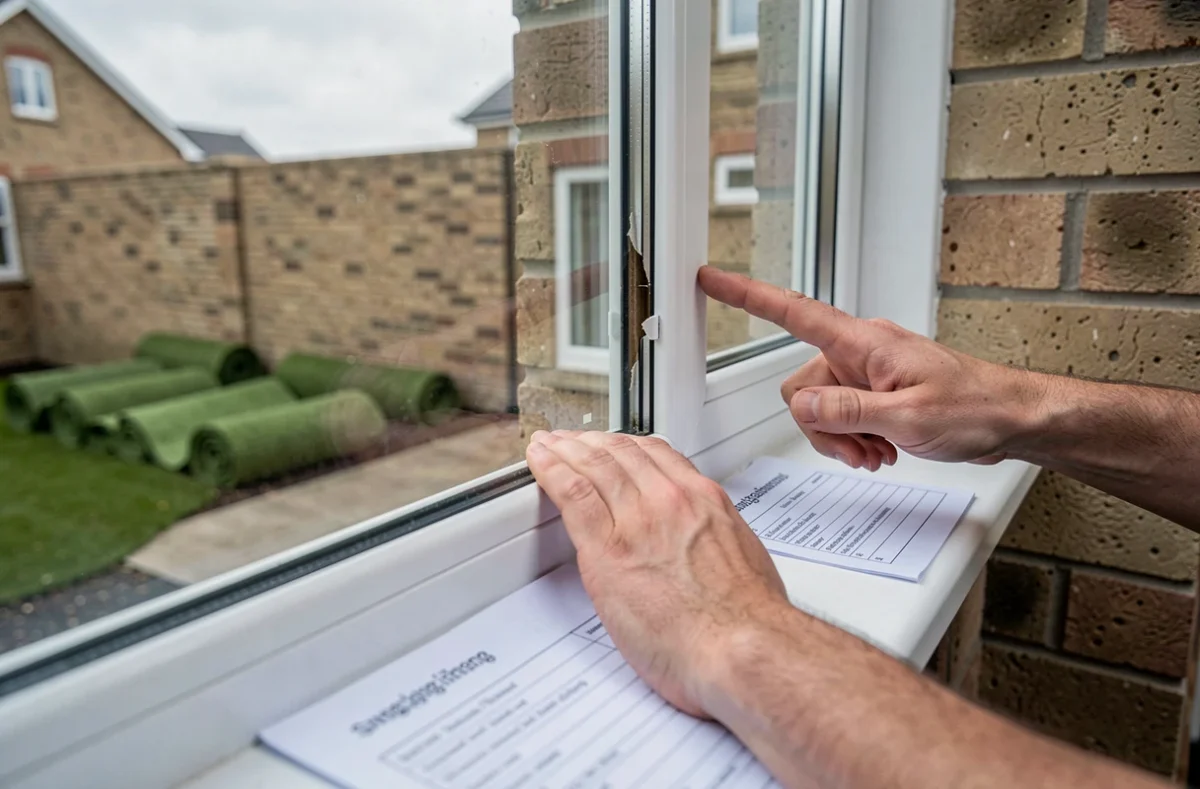
Timing your snagging survey for maximum leverage
The ideal sequence is simple to describe and harder to execute. A pre-completion inspection catches the most visible defects, giving the developer a formal list before you exchange final funds. A follow-up once services are connected picks up everything the first visit could not.
Professional snagging companies typically charge a few hundred pounds and produce a detailed, photographic report. Developers tend to treat these reports with more weight than handwritten lists, partly because they follow a standardised format and partly because they create a document trail that warranty providers and ombudsmen accept.
Snagging does not end at completion. The builder-warranty period (usually two years) exists precisely because some defects take months to appear: settlement cracks, damp patches after a wet winter, doors that stick as timber dries. Set a calendar reminder to carry out a thorough review before that two-year window closes, and submit any new defects in writing with photographs.
Confirming which defects are covered, by whom, until when, and through which process before you move in is the practical difference between a resolved defect and one that goes nowhere. Coverage terms, responsible parties, and deadlines are worth more attention than the longest snag list on day one.





