


Branch banking access in the United Kingdom is measured most often by a single metric: how far a customer lives from the nearest counter. That number is falling. The share of the UK population living within three miles of a branch run by a larger personal current account provider dropped from 87% in 2022 to 86% in 2025.
The decline looks modest in percentage terms, but it masks a sharper reality for communities that have already lost multiple services. The next nearest branch may require a bus journey that runs twice a day, or a ferry crossing that does not run at all.
Recommended read: New Consumer Duty Rules Reshape Credit Card Services
What “reasonable access” to branch banking actually means
The government has committed to introducing legal protections for face-to-face banking services. The proposal, however, does not require every existing branch to stay open. Instead, it tasks regulators with defining “reasonable access”, a term that remains unsettled in regulatory detail.
Several questions are still open. Which firms will fall under the new framework? How will in-person, telephone and digital channels each count towards an access threshold? And what constitutes a shortfall significant enough to trigger a remedy?
You may also like: Open Banking Reforms Aim to Improve Personal Finance Choices
Under the existing cash-access regime overseen by the FCA, assessments already go beyond simple distance. They weigh up travel time and cost, facility capacity, opening hours, and the needs of vulnerable people and local businesses. The independent Access to Banking Review noted, though, that the current cash-access rules cover deposits and withdrawals only, and do not extend to broader banking services such as account servicing, identity verification or fraud support.
This distinction matters. A customer who can withdraw cash from a free-to-use ATM three miles away may still have no realistic way to dispute a fraudulent transaction, set up a standing order with help, or verify their identity for a new account without travelling considerably further.

Banking hubs: awareness versus actual capability
Banking hubs, operated through the Post Office with support from Cash Access UK and LINK, are the centrepiece of the current expansion strategy. LINK announced 15 new hubs as access-to-cash regulations came into effect, and a growing list of locations is published on the Post Office website.
At a hub, customers of participating banks can typically access cash deposits and withdrawals, cheque deposits, and some account servicing. A community banker, employed by one of the major banks on a rotating basis, provides a limited appointment service for more complex needs.
Awareness of hubs has risen, but the independent review found that understanding of available services remained limited, including among people who already use them. That gap between knowing a hub exists and knowing what it can actually do creates a practical barrier that raw site counts do not capture.
- Cash transactions (deposits, withdrawals, coin exchange) are available at most hubs during standard hours, but hours vary by location and are often shorter than a traditional branch.
- Account servicing depends on which bank’s community banker is present on a given day, so a customer of a different bank may need to return on another date.
- Complex tasks (mortgage queries, bereavement processes, power-of-attorney registration) are rarely handled on-site and usually require a referral to a telephone line or a journey to a full branch.
The result is that a hub can resolve a simple cash need but may not replace the specific operation a customer travelled there to complete.
Rural and island communities face compounding service losses
National averages obscure what happens when branch closures stack up across neighbouring towns. Consumer Scotland has called on the UK Government and the FCA to take fuller account of the particular circumstances of Scotland’s rural and island communities, where the loss of one branch is rarely an isolated event.
A village that loses its branch may be told the nearest alternative is twelve miles away. If that alternative then closes, the next option could involve a ferry or a mountain pass that is impassable in winter. Consumer Scotland’s concern is that cumulative service losses across adjacent areas are not adequately weighted in current closure assessments.
This is not exclusively a Scottish issue. Parts of rural Wales, the Lake District and the Norfolk coast face similar compounding effects. The proposed framework will need to address whether “reasonable access” is judged community by community in isolation, or whether it accounts for the broader pattern of withdrawal across a region.
Nationwide’s branch commitment and what it signals for the market
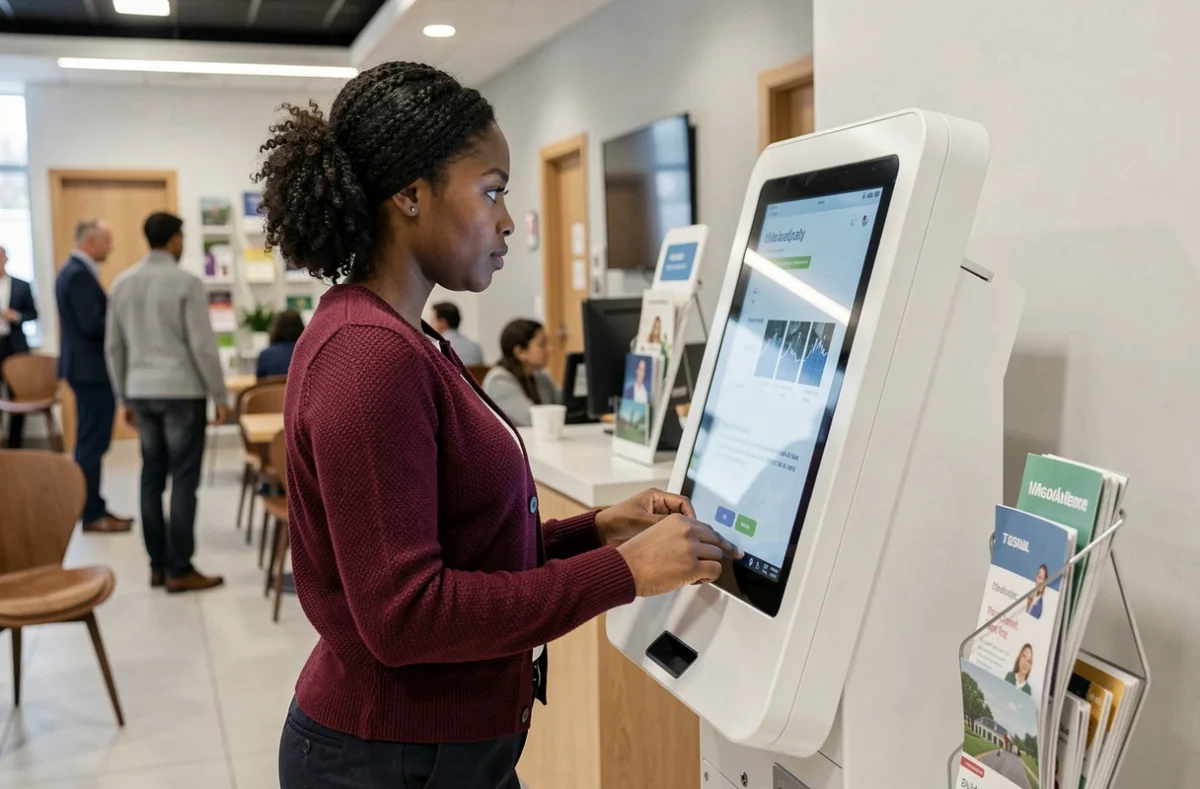
While the major high street banks continued planned closures throughout 2025 and into 2026 (with more than 80 branches closing in June alone and over 240 axed by year-end), Nationwide moved in the opposite direction. The building society committed to keeping every one of its branches open until at least 2030, including locations where Nationwide and Virgin Money branches sit close together.
Nationwide supported 6.7 million unique branch users in 2025, a 5.1% increase on the previous year and the highest figure since the pandemic. More than half of the market’s branch-based product openings were made with Nationwide. With 696 branches (605 Nationwide, 91 Virgin Money), it is on track to operate the UK’s largest branch network.
These figures suggest that demand for in-person banking has not disappeared. Customers value the choice between branch, online and telephone, and when branches close, the remaining providers absorb displaced demand. The commercial question for banks that are closing sites is whether the customers they lose will return through digital channels, or whether those customers simply move to whoever still has a door they can walk through.
How the new framework might reshape branch banking access
UK Finance has pledged to work with the government, the FCA, Cash Access UK and LINK to develop the formal framework. The goal is to enhance and protect access across physical branches, banking hubs, Post Office counters, mobile branches, community bankers, apps, online platforms and telephone banking.
For the framework to represent a genuine improvement, it will need to do more than count locations on a map. The critical tests are whether it:
- Defines access by the ability to complete a specific transaction, not merely by proximity to a branded counter.
- Requires cumulative-impact assessments when closures affect clusters of neighbouring communities.
- Sets minimum service standards for banking hubs so that customers know, before they travel, whether their need can be met on-site.
- Includes enforceable obligations rather than voluntary commitments that can be quietly revised.
The shift from counting branches to measuring real capability for real people is the difference between a framework that reassures headlines and one that changes outcomes. Until the detailed rules are published, the expansion of hubs and the preservation pledges from building societies like Nationwide remain the most tangible signs that in-person banking is not being quietly abandoned, even as the network around it contracts.





