


Overdraft pricing across UK current accounts converged around a single annual interest rate after the FCA’s 2020 reforms, yet the regulatory obligations banks carry when customers rely on that facility remain poorly understood.
FCA Handbook rules now require firms to do more than send a text message suggesting a customer reduce their overdraft usage. Where repeat use is identified and may lead to avoidable costs, the bank must actively contact the customer and, in cases of financial difficulty, discuss structured support.
See also: What Happens When You Switch Bank Accounts
FCA repeat-use rules and the duty to intervene on overdrafts
The Handbook draws a clear line between repeat overdraft use and financial difficulty, and each triggers a different regulatory response. For customers whose overdraft use is likely to continue and generate avoidable interest charges, firms must issue an initial warning. If the pattern persists, a follow-up is required, and ongoing repeat use demands further communication at least annually.
Financial difficulty is handled separately. When a bank identifies signs of actual or potential hardship, the obligation shifts from communication to individual assessment. The firm must discuss suitable support, which can include refinancing on more favourable terms or agreeing a sustainable repayment plan.
Further reading: How to Choose a Bank for Your Everyday Finances
A point most bank product pages omit entirely: FCA guidance states that reducing or removing an overdraft facility should not itself cause financial hardship. Cutting a limit from, say, £2,000 to £500 overnight might look prudent on a risk dashboard, but if the customer then cannot cover rent, council tax, food or utilities, the intervention fails its own regulatory test. A repayment arrangement is considered unsustainable if it leaves someone unable to meet priority debts and essential living costs.

Arranged overdraft cost structure since the 2020 reforms
Before the FCA’s intervention, overdraft pricing was notoriously opaque. Daily fees, tiered interest rates and separate charges for arranged versus unarranged borrowing made genuine cost comparison almost impossible. The reforms forced a shift to a single annual interest rate for all overdraft lending on personal current accounts, eliminating fixed daily or monthly fees.
Most major UK banks now charge an EAR (equivalent annual rate) on arranged overdrafts. The rate applies to the amount overdrawn each day, calculated daily and debited monthly. There is no separate fee for having the facility in place, and no higher rate for exceeding an agreed limit, because unarranged overdraft use now carries the same rate as arranged borrowing.
What the single rate means in practice
A uniform rate simplifies comparison but does not make overdrafts cheap. The annual percentage on most high-street accounts sits well above the rate on a typical personal loan. For short-term, low-value borrowing (a few hundred pounds for a few days), the absolute cost in pounds is small. For persistent use at higher balances, the annual cost can rival that of a credit card carried at its limit.
This is precisely why the FCA’s repeat-use rules exist. The single rate was never designed to make long-term overdraft borrowing acceptable; it was designed to make its cost visible so that customers and banks could act on it.
Overdraft limit eligibility and credit assessment
Applying for an arranged overdraft triggers a credit check. Banks assess income, existing debt commitments and credit file data. Approval is not guaranteed, and limits vary by provider and individual circumstance. Some accounts offer no overdraft facility at all, particularly basic bank accounts.
- An arranged overdraft limit is set at account opening or requested later through online banking or a branch visit. The bank can decline, reduce or withdraw the facility at any time following a review.
- Unarranged overdraft transactions (spending beyond the agreed limit or without an arranged facility) may be declined at the point of sale or, if the bank permits them, charged at the same interest rate as arranged borrowing.
- Switching banks does not automatically transfer an overdraft. The new provider will assess eligibility independently, and there is no obligation to match a previous limit.
For customers with impaired credit histories, approval is less likely. Specialist accounts may offer a small buffer zone, but overdrafts are not a universal feature of UK current accounts.
When banks must reduce an overdraft and when they must not
This is where the regulatory framework gets genuinely interesting. The instinct of a compliance team spotting persistent overdraft reliance is often to lower the limit, nudging the customer towards reduced borrowing. The FCA’s guidance pushes back against that reflex.
Firms should consider whether withdrawing or reducing a facility could itself cause hardship. If a customer is using their overdraft to cover essential expenditure, removing the buffer without an alternative plan in place may push them into missed payments on priority obligations, bounced direct debits, or reliance on higher-cost credit.
The assessment framework
The Handbook expects banks to assess each case individually. The process involves:
- Identifying whether the customer is in repeat use, financial difficulty, or both.
- Communicating proactively, not waiting for the customer to raise a complaint.
- Offering alternatives that could include a structured repayment plan, refinancing into an instalment product at a lower rate, or signposting to free debt advice.
- Ensuring any proposed arrangement leaves the customer able to meet priority debts (rent, mortgage, council tax) and essential living costs (food, utilities, transport).
The guidance explicitly cautions that overdrafts are generally unsuitable for long-term borrowing that creates a high total cost burden. This is not a suggestion; it is a regulatory expectation that shapes how firms design their monitoring and intervention processes.
Regulatory review of the overdraft reforms
The FCA has listed its evaluation of the overdraft pricing reforms among its recent rule-review work. The fact that an evaluation has been conducted signals the regulator treats these rules as a living framework, not a one-off intervention. The published account of that review programme does not detail specific findings on cost or consumer outcomes, so we should not overstate what it concluded, but its existence confirms ongoing scrutiny of whether the reforms are delivering what they promised.
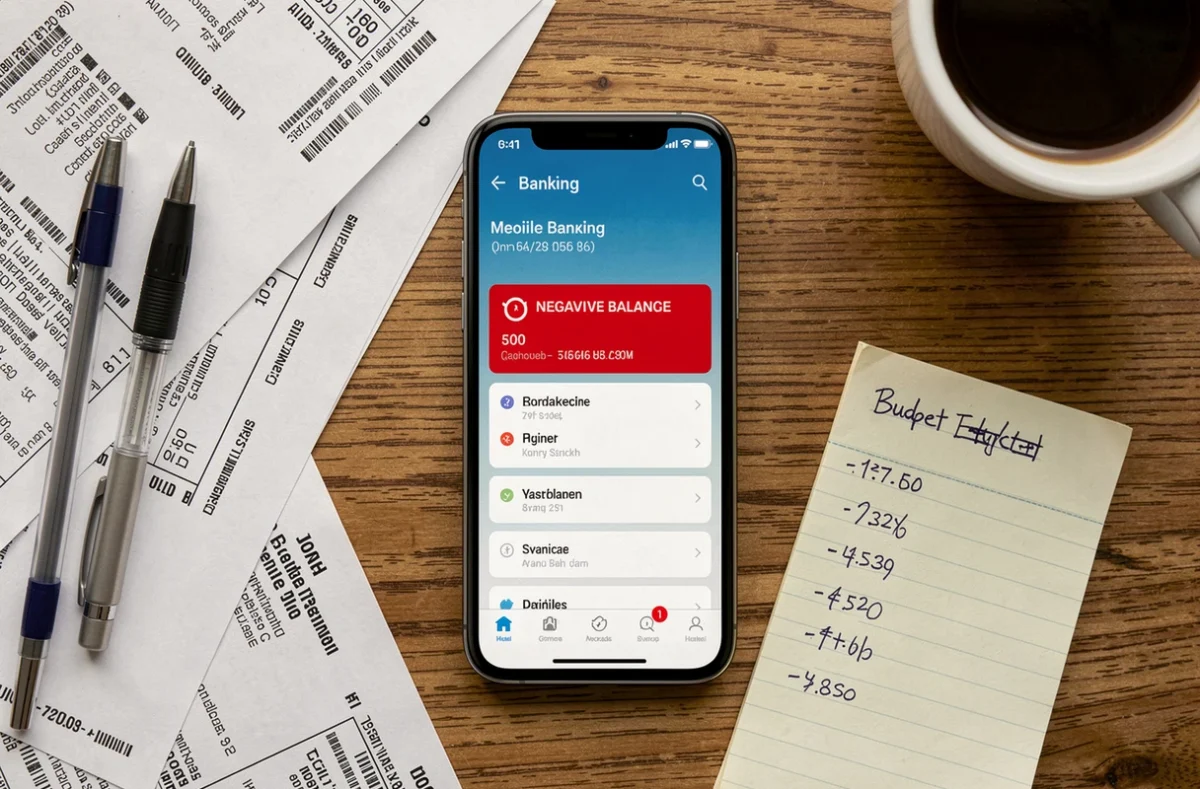
Overdraft repayment and practical alternatives
Overdraft repayment has no fixed schedule. Any money paid into the account reduces the overdrawn balance, and interest accrues only on the outstanding amount each day. This flexibility is the product’s main appeal, but also its structural weakness: without a repayment deadline, balances can persist indefinitely.
For customers stuck in a cycle of monthly overdraft reliance, several alternatives exist. A money transfer from a credit card at a promotional rate can clear the balance and convert it into fixed monthly repayments. Personal loans offer a lower interest rate for larger sums. Budgeting tools within banking apps can flag when spending patterns are likely to push an account into overdraft territory.
Free debt advice services, including StepChange and Citizens Advice, can help negotiate with banks on behalf of customers in difficulty. Banks are required to signpost these services when engaging with customers identified as being in financial hardship.
The overdraft remains a useful short-term borrowing tool for irregular cash-flow gaps. Where it becomes a permanent feature of a household’s finances, the cost mounts and the regulatory expectation on the bank intensifies. The clearest takeaway from the current framework is that neither the customer nor the bank benefits from pretending persistent use is temporary.





