


A household running its heating for a couple of hours each evening faces a different budget problem from one that keeps the boiler off for weeks at a time. Under the current price cap structure, both pay the same daily gas standing charge, roughly the same fixed cost whether the meter ticks or not.
From 2027, that fixed charge disappears from gas bills and shifts into the unit rate, which means your gas bill will track actual consumption far more closely. For anyone trying to plan spending across 2026 and into the following year, the distinction matters more than the headline cap figure.
Recommended read: Autumn Budget 2026: what the changes mean for household finances
Gas standing charge removal and what it changes for low-use households
The government has confirmed that gas standing charges will be scrapped from 2027, with the costs currently covered by that charge folded into the gas unit rate instead. On paper, that sounds like a saving. For households that use relatively little gas, it probably is one, because they will no longer pay a flat daily fee that represents a large share of their total bill.
For higher-use households, the picture is less clear. A higher unit rate means every cubic metre of gas costs more, so anyone heating a large or poorly insulated property could end up paying a similar total or even more. The government has said it will set out targeted mitigation for households that do not see an automatic saving, though the detail of those measures has not yet been published.
See also: Planning Monthly Bills Around an Irregular Income
The practical takeaway for budgeting is this: if you use gas mainly for cooking and occasional hot water (a small flat, a household with a heat pump handling most heating), your annual gas cost should drop once the standing charge disappears. If you rely heavily on gas central heating through the winter months, treat the change as neutral until the mitigation package is confirmed.

Ofgem price cap forecasts for early 2027: planning, not certainty
Several forecasters have projected a rise in the price cap from January 2027. Ofgem had not confirmed the cap at the time of writing, so any January 2027 figure remains a forecast, not a guaranteed bill increase. Treating it as a planning scenario rather than a fact is the safest approach for household budgets.
What we do know is how the cap works in practice. The Ofgem price cap sets maximum unit rates and standing charges that suppliers can charge customers on default tariffs. It updates quarterly. The “typical annual bill” figure that appears in headlines is based on median consumption, not your consumption. Regional rates and payment method also create meaningful differences.
Why the “typical bill” figure can mislead
Ofgem’s illustrative annual bill assumes a specific level of gas and electricity use and a direct debit payment method. Households paying by prepayment meter or on receipt of a quarterly bill face different rates. Those differences can amount to a noticeable sum over a year.
- Direct debit customers generally see the lowest unit rates under the cap, because suppliers’ cost-to-serve is lower for predictable monthly collections.
- Prepayment meter customers have historically paid more, though Ofgem has narrowed this gap in recent cap periods.
- Quarterly bill payers (standard credit) tend to face the highest rates, reflecting higher administrative and debt costs for suppliers.
When you read a headline about typical bills rising or falling, check which payment method the figure assumes. If you pay by prepayment meter, the headline number may understate your actual spend.
Electricity VAT relief: a budget line with an expiry date
Electricity remains VAT-free as part of a temporary government measure, but that relief has a stated end date of July 2027. For anyone building a household budget that spans the 2026-27 financial year, this matters. The months from April to July 2027 would still benefit from the zero rate, but from August 2027, VAT returns to the standard level unless the government extends the measure.
Concretely, do not assume the electricity VAT cut continues beyond July 2027. If you are setting aside money each month into a bill reserve, factor in a step up in electricity costs from the summer of 2027. The increase would apply to the unit rate, so it scales with usage, hitting higher-consumption households harder.
The £100 household energy payment: check eligibility before counting on it
The Autumn Budget announced a one-off £100 Household Energy Payment for eligible households. The word “eligible” does the heavy lifting. The payment is not universal: it is limited by eligibility criteria and geography. Local arrangements may vary, and not every household will qualify automatically.
Before pencilling £100 into your winter budget, check whether your household meets the criteria. The payment is designed as a one-off, not a recurring subsidy, so it covers a fraction of one quarter’s energy cost rather than providing ongoing support. Useful, but not a substitute for adjusting your monthly budget to reflect actual cap rates.
Practical steps to build a cap-aware energy budget
Rather than reacting to each quarterly cap announcement, a more stable approach is to set a fixed monthly energy reserve based on the highest cap scenario you expect over the next twelve months.
- Check your actual consumption on your smart meter or supplier app. Compare it to Ofgem’s “typical” figure to see whether headline numbers overstate or understate your likely spend.
- Set your direct debit slightly above your average monthly cost to build a buffer for winter quarters when usage spikes.
- Review your tariff type. If you are on a default (variable) tariff, you are subject to the cap. Fixed-rate deals may offer certainty but can lock in a price above the current cap if wholesale costs fall.
- Track the cap announcement dates (Ofgem publishes quarterly, usually a few weeks before the new quarter starts) so you can adjust your reserve if the direction shifts.
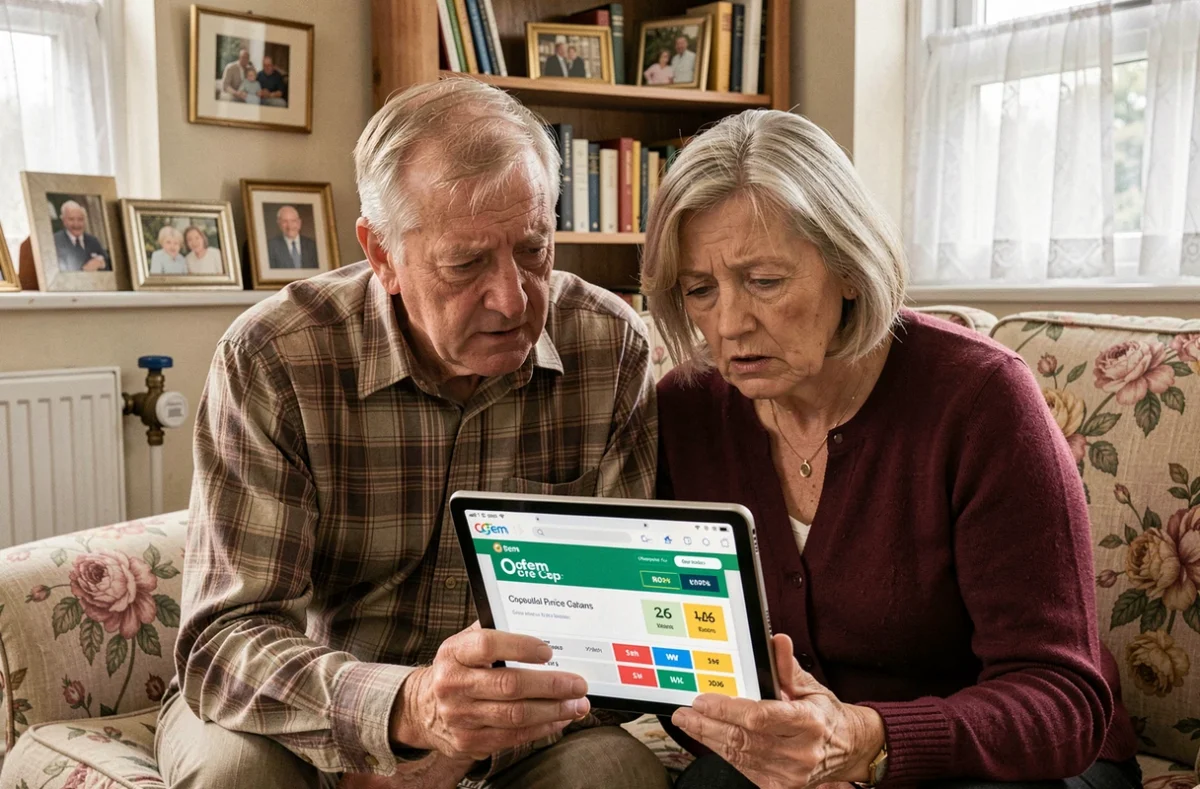
Will shifting fixed costs to the unit rate make gas budgets more predictable?
This is the question that the standing charge removal raises for low-use households. In theory, yes. If you barely use gas in summer, a bill composed entirely of a unit rate and no standing charge should drop close to zero in those months, making seasonal variation in your outgoings more transparent.
The trade-off is that winter months will feel sharper, because the unit rate now carries the network and policy costs that the standing charge used to spread evenly across the year. For someone budgeting month by month, that creates a lumpier cash flow profile: lower lows in summer, higher highs in winter.
Whether that is “more predictable” depends on your budgeting style. If you prefer a flat monthly outgoing, a standing charge actually helped smooth things. If you prefer paying for what you use and nothing more, the new structure is an improvement. Neither approach is wrong, but the shift rewards households that actively manage their monthly reserves rather than relying on a fixed daily charge to average things out.
The cap itself remains the guardrail. Regardless of how standing charges are restructured, Ofgem’s quarterly cap limits what suppliers can charge per unit. The structural change affects how costs land across the year, not the total annual maximum. For 2026, the most useful thing any household can do is compare its own meter readings against the “typical” assumptions, check eligibility for the £100 payment, and treat forecast cap figures as scenarios to plan around, not bills to pay.





