


Council tax bills for 2026 carry a new layer of complexity. Alongside the standard discounts, exemptions and payment arrangements that apply every year, the government announced on 28 October 2026 that roughly 20 million households in bands A to D will receive a £100 payment deposited into their bank accounts from January 2027.
That payment sits within a broader energy-bill support package rather than a change to ordinary council tax rules. It is administered through the council tax system, which means eligibility, delivery method and deadlines all hinge on what your local authority holds on file about you.
Recommended read: ISA allowance in 2026: making the most of tax-free savings
The £100 council tax payment: who actually qualifies
The initial announcement suggested the payment was limited to people who personally pay council tax in bands A to D. The detailed delivery plan published by GOV.UK on 24 November 2026 widened the picture considerably.
Eligibility extends to some band A-D households that do not pay council tax at all. That includes certain households receiving Local Council Tax Support, eligible student-only properties, and properties occupied solely by under-18s or by people who are severely mentally impaired. Homes placed in bands A to D through the Disabled Band Reduction also qualify.
Further reading: UK income tax thresholds in 2026 and the impact of fiscal drag
This matters because a household that has never received a council tax bill might assume it falls outside the scheme. In practice, the local authority still holds a record for that property, and if it sits in the right band, the payment should be issued.
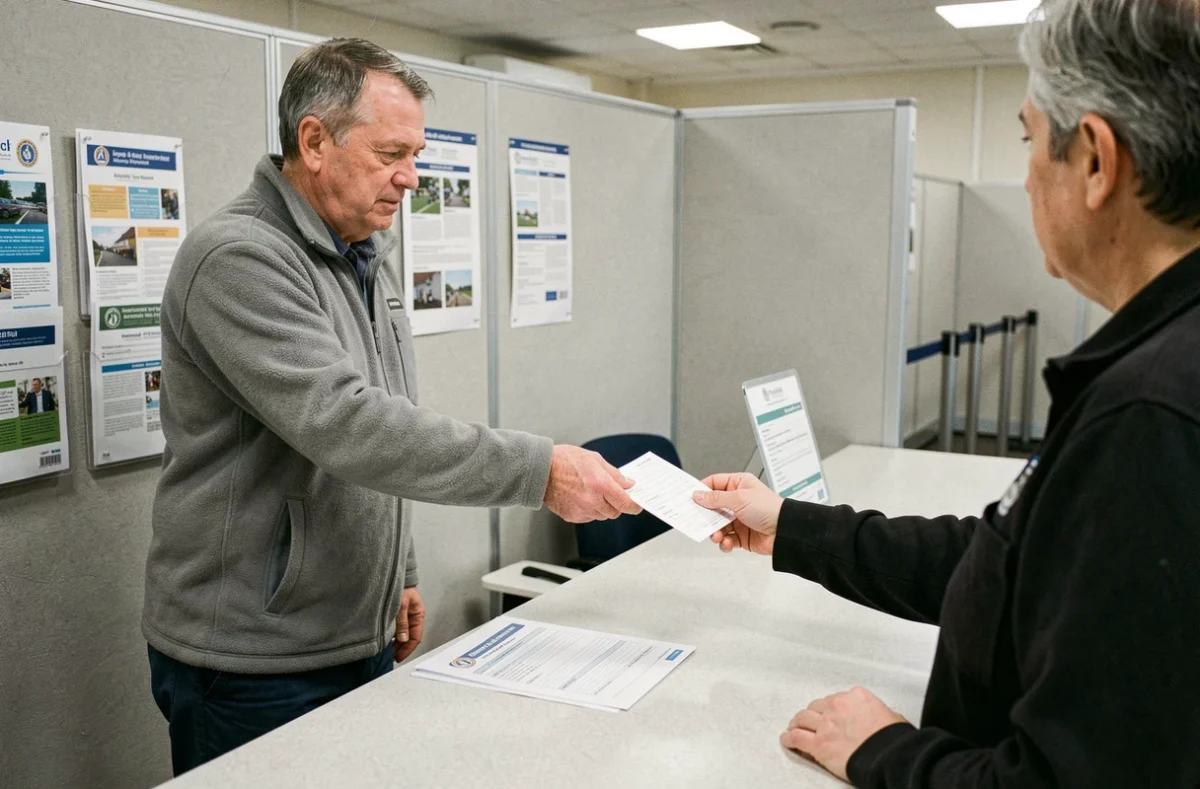
Households without direct debit: what to do before the scheme closes
The payment scheme has a defined closing point. Councils will use the bank details they already hold, which in most cases means the account linked to a direct debit mandate. For households that pay by other means (standing order, online card payment, cash at a PayPoint terminal), the council may not have usable bank details on file.
If you are eligible and do not pay by direct debit, the steps are worth taking early rather than waiting:
- Check your council’s website or contact them directly to confirm which bank details they hold for your account. Some councils have published dedicated pages for the £100 payment with an online form to submit or update banking information.
- If your council asks you to provide bank details, do so well before the scheme’s closing date. Councils processing millions of payments will not chase individual households, and late submissions risk missing the payment window entirely.
- Keep any confirmation email or reference number. If the payment does not arrive by the date your council specifies, that reference is the fastest route to a resolution through the council’s enquiry line.
Councils have been given no obligation to pursue households that fail to respond. The burden sits with the householder, which is a departure from most council tax processes where the authority initiates contact.
Council tax discounts and exemptions that apply regardless of the £100 payment
The £100 payment is a one-off measure. The permanent framework of discounts and exemptions continues to operate separately and can reduce a bill far more substantially over a full year.
Single person discount and disregarded adults
A 25% single person discount applies where only one adult in the household counts for council tax purposes. Certain residents are “disregarded” when calculating occupancy: full-time students, apprentices on approved schemes, people under 18, student nurses, care leavers under 25 funded by the Education and Skills Funding Agency, and those who are severely mentally impaired.
Where every resident in a property is disregarded, the bill still exists but attracts a 50% discount. If all occupants are full-time students or all are severely mentally impaired, the property may be exempt entirely.
Council Tax Reduction for low-income households
Council Tax Reduction (sometimes called Council Tax Support) is a means-tested scheme run by each local authority. Eligibility criteria and the level of support vary from one council to another, which means two households with identical incomes in neighbouring boroughs can receive different amounts of help. There is no single national threshold for eligibility.
Applying requires contacting your local council directly. Most councils accept applications online, and some backdate the reduction to the date you first became eligible, provided you can supply supporting evidence.
Disability reduction scheme
A separate reduction exists for properties adapted for a disabled resident. Where a home has an extra room, an extra bathroom or kitchen, or sufficient floor space used to meet the needs of a disabled person, the council tax bill drops to the band immediately below the property’s actual band. A band A property receives an equivalent reduction. This applies in England and Scotland, with Wales operating bands A to I.

Empty properties, second homes and council tax premiums in 2026
Councils in England now have broader powers over empty and second-home charges. A property left unoccupied and substantially unfurnished may initially qualify for a discount, but after a defined period most councils remove it and may apply a premium on top of the standard bill.
Second homes that are furnished but not anyone’s main residence face varying treatment. Some councils charge the full rate; others have introduced premiums. The rules differ across Scotland and Wales, where councils have their own frameworks for setting premium levels on second homes and long-term empty properties.
Owners who believe their property is banded incorrectly can challenge the valuation through the Valuation Office Agency in England and Wales, or the Scottish Assessors Association in Scotland. A successful challenge can move the property to a lower band and reduce the annual charge permanently, though a challenge can also result in a higher band if the assessor determines the original banding was too low.
Payment options beyond direct debit
Direct debit remains the most common payment method, but councils also accept:
- Online debit or credit card payments through the council’s portal
- Telephone payments via automated or staffed lines
- Cash or card at PayPoint or Post Office locations, using the barcode on the bill
- Standing orders set up through your bank, though the council will not adjust the amount automatically if the bill changes mid-year
Spreading the bill across twelve instalments rather than ten lowers each payment and can help with budgeting, though the total annual amount remains the same. Many councils will accommodate a request to change your instalment schedule.
For the £100 payment specifically, the delivery method depends on what the council already holds. Households paying by direct debit should see it arrive automatically. Everyone else needs to act before the scheme’s closing date, and no council has yet confirmed a fallback for households that miss it.





